topweblogic@gmail.com
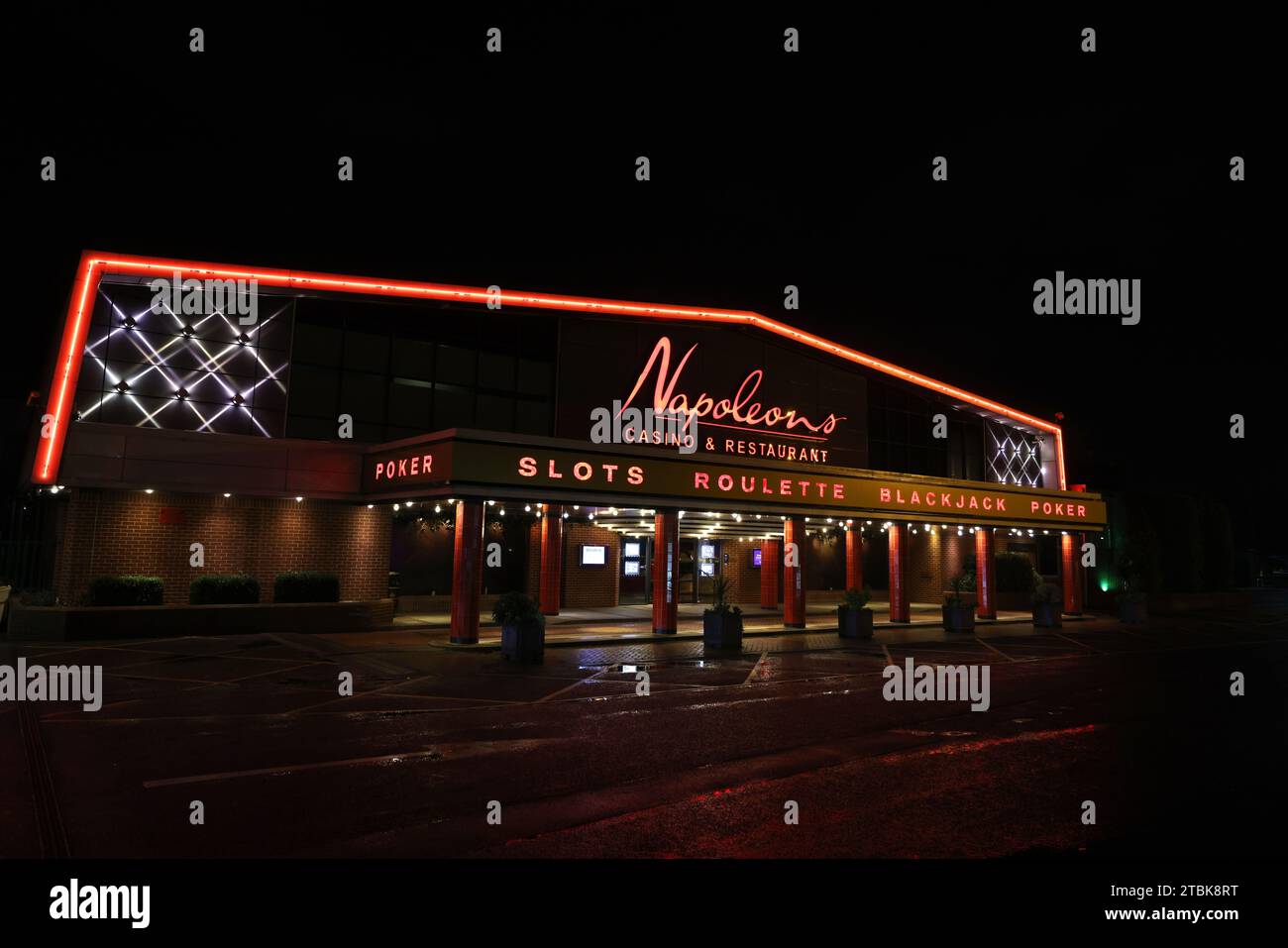
Roulette is amongst these unique casino games where style meets sheer chance https://napoleon-be.eu/fr-be/. After years at both land-based and online tables, I still get a minor thrill every time the ball starts its hypnotic spin. The key to genuinely enjoying the game, whether you play live at Napoleon Casino or test the digital wheels, isn’t chasing a miracle system. It’s about knowing the unique personality of each roulette variant and adjusting your behaviour accordingly. Too many players treat European, French, and American roulette as interchangeable, when in reality the mathematical structure and betting rituals differ enough to make or break a session. I’ve watched seasoned gamblers lose needlessly simply because they ignored the extra zero on an American layout, and I’ve seen complete beginners protect their bankroll beautifully by sticking to even-money outside bets on a French table with the La Partage rule. This guide brings together the essential do’s and don’ts I’ve picked up across dozens of variants, stripped of fluff and delivered in a way that helps you make calm, informed decisions. By the time you reach the final section, you’ll understand exactly which version suits your temperament, which mistakes quietly drain your balance, and how a platform like Napoleon Casino can give you the right environment to practise these principles without pressure.
Knowing the Main Roulette Types
Prior to I get into the do’s and don’ts, I need to define the key three roulette types you’ll find most often, because every tactical tip flows from the operational differences between them. European roulette is the baseline: a one-zero wheel with 37 pockets, providing the house a slight edge of 2.70%. I suggest newcomers treat this version as their training ground, since the math are clear and the betting grid familiar. French roulette shares the same single-zero wheel but adds two advantageous rules, La Partage and En Prison, that can cut the house edge on even-money bets all the way to just 1.35%. American roulette, in contrast, adds a additional zero, the double zero, expanding the wheel to 38 pockets and raising the house edge to a significant 5.26% on most wagers. That difference might seem small, but over a stretch of a hundred spins it certainly reshapes your expected loss. Occasionally you’ll also encounter mini-roulette with fewer numbers, multi-wheel setups, or rapid-play formats, and each brings its own nuance. I’ve found that viewing every wheel as having the same risk profile is the swiftest way to lose money to the casino. A collected, objective player always verifies the layout before buying in, because simply knowing the variant you’re playing is already the primary do of smart roulette play.
The French Wheel: An Intelligent Choice
French roulette is a personal favorite because it rewards caution without requiring additional expertise. I’ve repeatedly observed it make small bankrolls last longer than any other variant. The wheel is a single-zero European layout, but the essence lies in the two rule variations that affect exclusively even-money bets: La Partage and En Prison. Under La Partage, if you put money on red, black, odd, even, low, or high and the ball hits the zero, you promptly obtain half of your stake back; this halves the house edge on those bets to 1.35%. En Prison delivers the same math result by holding your even-money wager ‘in prison’ for the next spin, refunding it if you win and giving it up only if you lose again. I often advise players that simply selecting a French table whenever it is offered at Napoleon Casino is one of the simplest yet most powerful decisions you can make. The do’s here are simple: always bet at least one even-money unit on any spin you play, and never get tempted into exotic inside bets that bypass the rule entirely. The only real don’t in French roulette is complicating your play; the grace of the game comes from letting mathematics work quietly in your favour, and piling on high-risk straight-up numbers defeats the purpose of seeking out the variant in the first place.
Errors That Can Deplete Your Bankroll
If the do’s give you a steady compass, the don’ts are the red flags I’ve learned to spot in my own play and in the people around me. The most destructive conduct, without question, is chasing losses by raising bet size impulsively. I’ve caught myself doing it early in my gambling life, and it converts what should be a relaxed session into an emotionally charged spiral. Another common error is treating the betting history board as a prediction tool. Every spin is separate, and the ball has no memory; believing that a red is ‘due’ after five blacks is a psychological trap, not a strategy. I’d also urge players not to load up the layout with dozens of chips on every spin. Spreading yourself too thin diminishes any real chance of meaningful returns and hastens your exposure to the house edge across multiple losing positions simultaneously. Perhaps slightly less evident, but equally dangerous, is ignoring the session clock. Playing tired or after consuming alcohol impairs judgment just enough to slip into that chasing pattern I mentioned earlier. Finally, never assume a bonus or promotion modifies the underlying odds of the game; wagering requirements can genuinely alter the value of a session, and at Napoleon Casino I always review the terms before activating any offer.
- Never chase losses by doubling up aggressively or ignoring your limits.
- Do not trust past results to forecast future spins.
- Avoid scattering chips randomly across the layout every single round.
- Never play when sleep-deprived or after alcohol has blunted your focus.
- Avoid activating a bonus without understanding the associated wagering rules.
Gambling Systems and the Reality Check
No discussion of roulette tips and warnings would seem whole without a sober look at betting strategies, because they are the most tempting rabbit hole a player can tumble into. I’ve tried Martingale, Fibonacci, Labouchère, and even the D’Alembert method across hundreds of plays, and I can say with total sincerity that none of them alter the house edge by even a fraction of a point. What they do affect is the pattern of your winning and losing sessions. The do here is simple: choose a flat-betting approach where you wager the same unit amount on each turn, or if you absolutely must use a method, keep it gentle and within table limits so that you never hit the ceiling or deplete your capital on a single cold streak. The don’ts are more abundant, and I have witnessed them burn funds again and again. Never use a negative method that doubles after a losing bet on a table with a low maximum bet limit, because a run of six or seven misses can drive you against the limit before you recover. Never assume that a method promises return; you are merely reshuffling risk over period. And under no conditions should you ever boost your base unit just because you’ve won a few rounds, because the house edge operates unceasingly in the backdrop no matter how certain you feel.
- Adopt a flat-betting method as your benchmark and only deviate with rigorous control.
- Recognize that systems alter the rhythm of successes and setbacks, not the theoretical value.
- Verify table caps before committing to any negative system plan.
- Do not increase your base stake after a winning streak; the math haven’t changed.
- View any system as amusement organisation, never as a mathematical edge.
Rules for Any Roulette Player
Irrespective of which type you sit down to, there are a few of behaviours I view non-negotiable if you aim to remain disciplined and actually appreciate the game as recreation rather than a urgent recovery mission. These do’s are based on the knowledge that roulette is a negative-expectation game. Nothing you do alters the house edge in the long run, but you can absolutely prolong your time at the table and reduce the volatility. The first and most vital do is to verify the wheel type before putting down a single chip. I’ve witnessed players at Napoleon Casino rush into an American roulette lobby assuming it’s European, then marvel why their funds melts faster than expected. Another key do is to prefer outside bets like red/black, odd/even, high/low, dozens, and columns, because they deliver more regular, albeit smaller, wins and keep you involved without wild swings. I also make it a practice to establish a hard loss limit and a gentle win goal before I sign on. Lastly, when a version offers La Partage or En Prison, I always stake at least some even-money wagers to trigger that rule; it’s essentially free insurance on nearly half the wheel. All this sounds simple, yet I constantly see players discard these principles at the earliest sign of a hot streak, which leads me smoothly into the corresponding don’ts.
- Invariably verify if the wheel is single-zero or double-zero before playing.
- Focus chiefly on outside bets to preserve a steadier bankroll rhythm.
- Establish a firm stop-loss and a realistic win target for every session.
- Enable La Partage or En Prison policies every time they are present.
- Train on free-play tables first if the variant is new to you.
American Wheel: What to Be Aware Of
American roulette wheels is visually exciting and often faster-paced, which is precisely why I handle it with additional caution. That additional 00 pocket changes the house advantage from a tolerable 2.70% to a far more aggressive 5.26% on most bets. The single exception, the five-number basket bet on 0, 00, 1, 2, and 3, has an even more unfavorable edge of 7.89%. My primary recommendation for this variation is to avoid that basket bet entirely; it is arguably the most unfavorable wager found on any standard casino table and I cannot envision a case where it holds statistical merit. If you decide to play American roulette, I recommend sticking exclusively to outside bets such as red/black bets or the dozens, because there the elevated edge still applies but at least you do not add unfavorable bet selection on top of a weaker foundation. I also adhere to a firm rule to reduce my session lengths when I play at a double-zero wheel; mathematically your bankroll diminishes faster, so dosing your exposure acts as a form of self-defense. The pitfalls here are clear: never consider American roulette as your go-to version if a European or French wheel is present at Napoleon Casino or elsewhere, and never succumb to the mistake of wagering on both zeros simply because they occur regularly on the board. That occurrence fails to justify the price you incur in expected long-term returns.
Picking the Proper Version for One’s Style at Napoleon Casino
One of the quiet pleasures of playing at Napoleon Casino is that you don’t have to settle for a single roulette flavour. I’ve always found that matching a version to your playing personality reduces frustration and increases satisfaction. If you are a careful player who appreciates the slow, steady burn of a session where your bankroll lasts for hours, French roulette with La Partage is your ideal choice; the low house edge on even-money bets and the tranquil rhythm of the game promote endurance. If you enjoy a bit more range in your straight bets but still want a solid mathematical foundation, European roulette offers the perfect middle ground. I find it suitable for diversifying my bets while controlling the extended financial impact. American roulette, with its faster pace and higher edge, suits a wholly separate attitude. I use it for quick, dynamic periods where I tolerate the elevated uncertainty as the trade-off for a more exciting journey. The proper action here is to honestly assess what you want from a session: long-term gentle entertainment or a quick shot of adrenaline, and then select the corresponding table in the Napoleon Casino lobby. The wrong move is to shift between types without modifying your approach and stake amounts, because what works beautifully on a French wheel will slowly drain your balance on a double-zero layout. With a calm approach and a modicum of self-control, roulette stops being a mystery and turns into one of the most reliably enjoyable games in the casino, particularly when you have the right platform to explore its many dimensions.